
Patient Transportation
Critical patient transport for brain injury
NeuroGuard
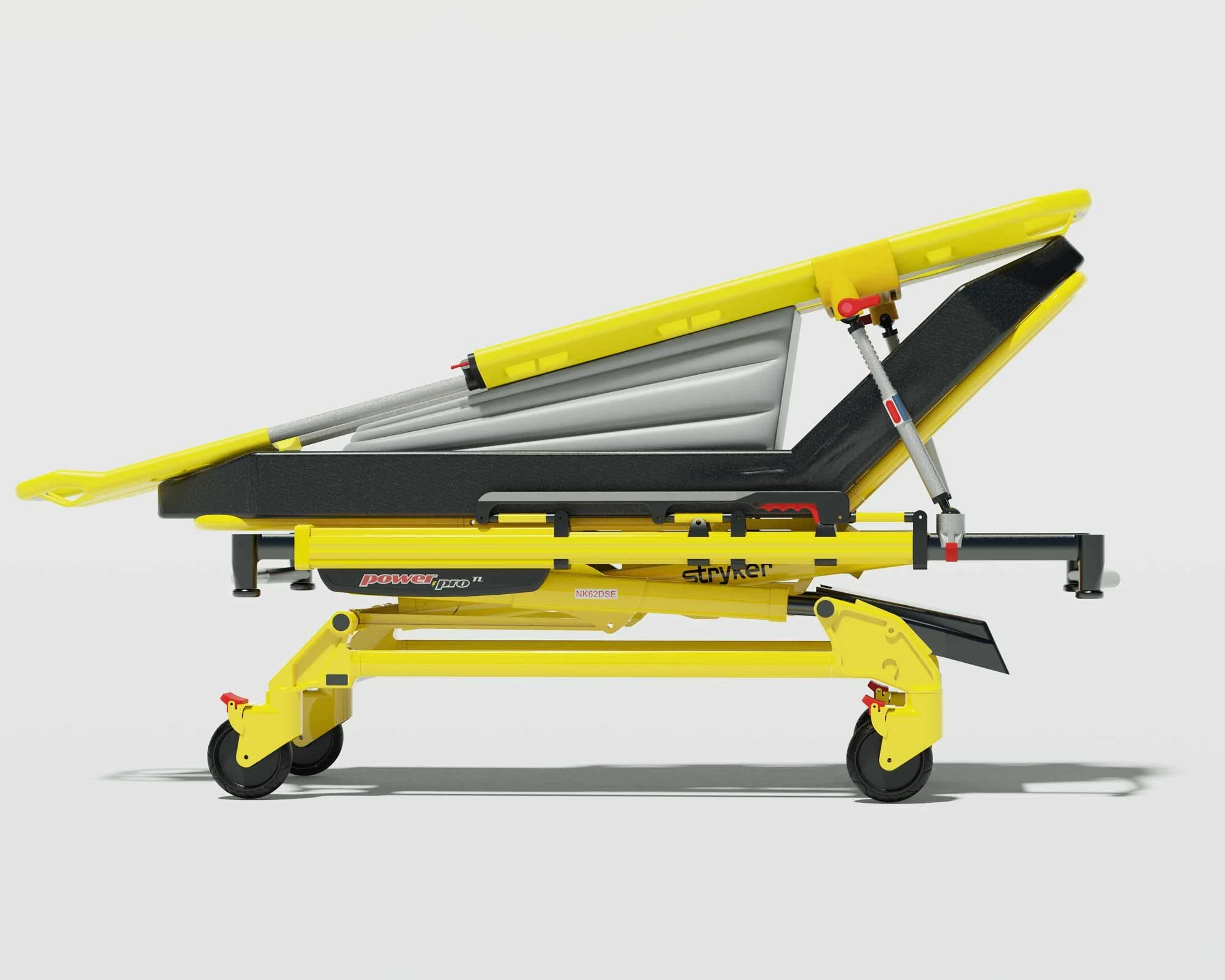
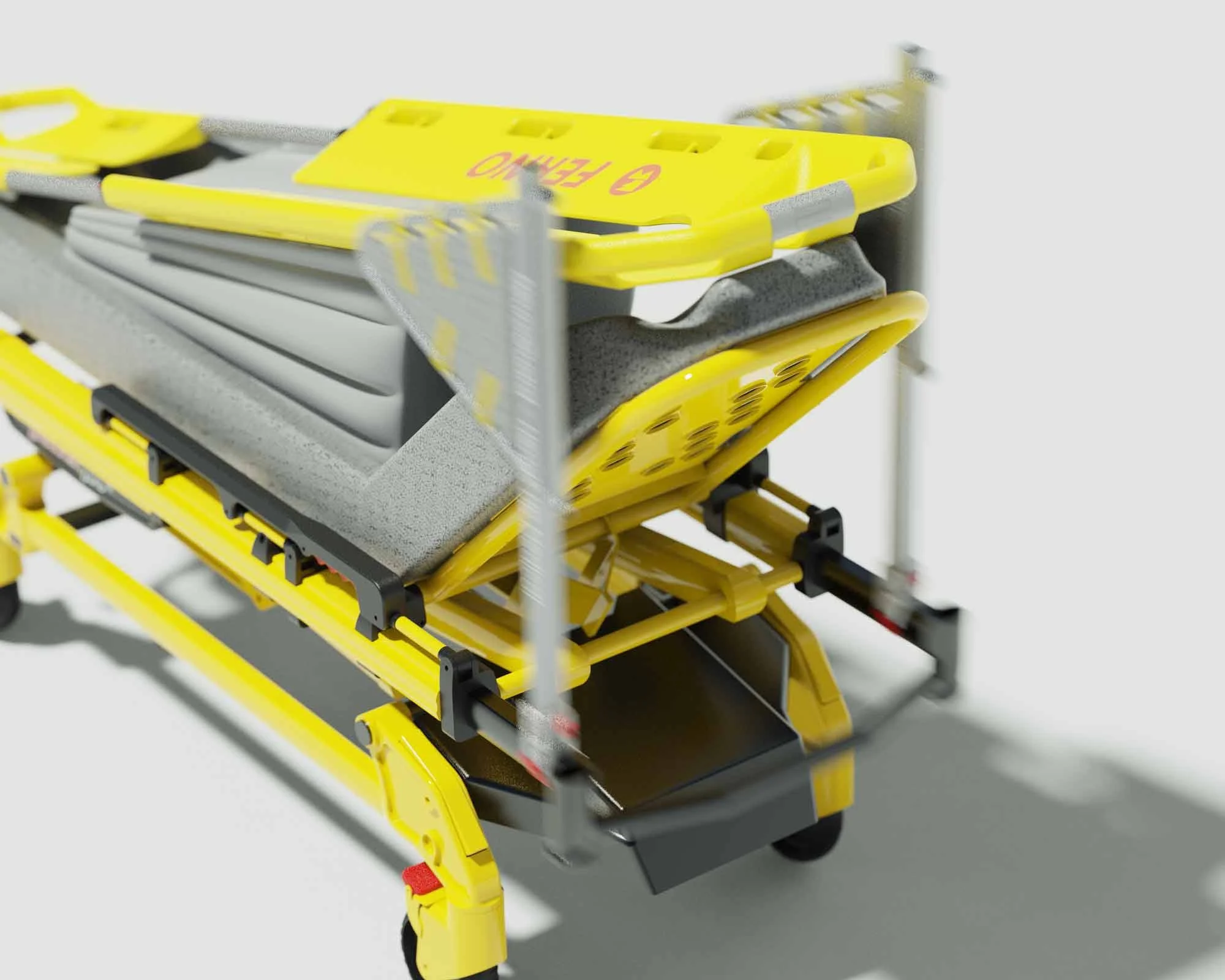
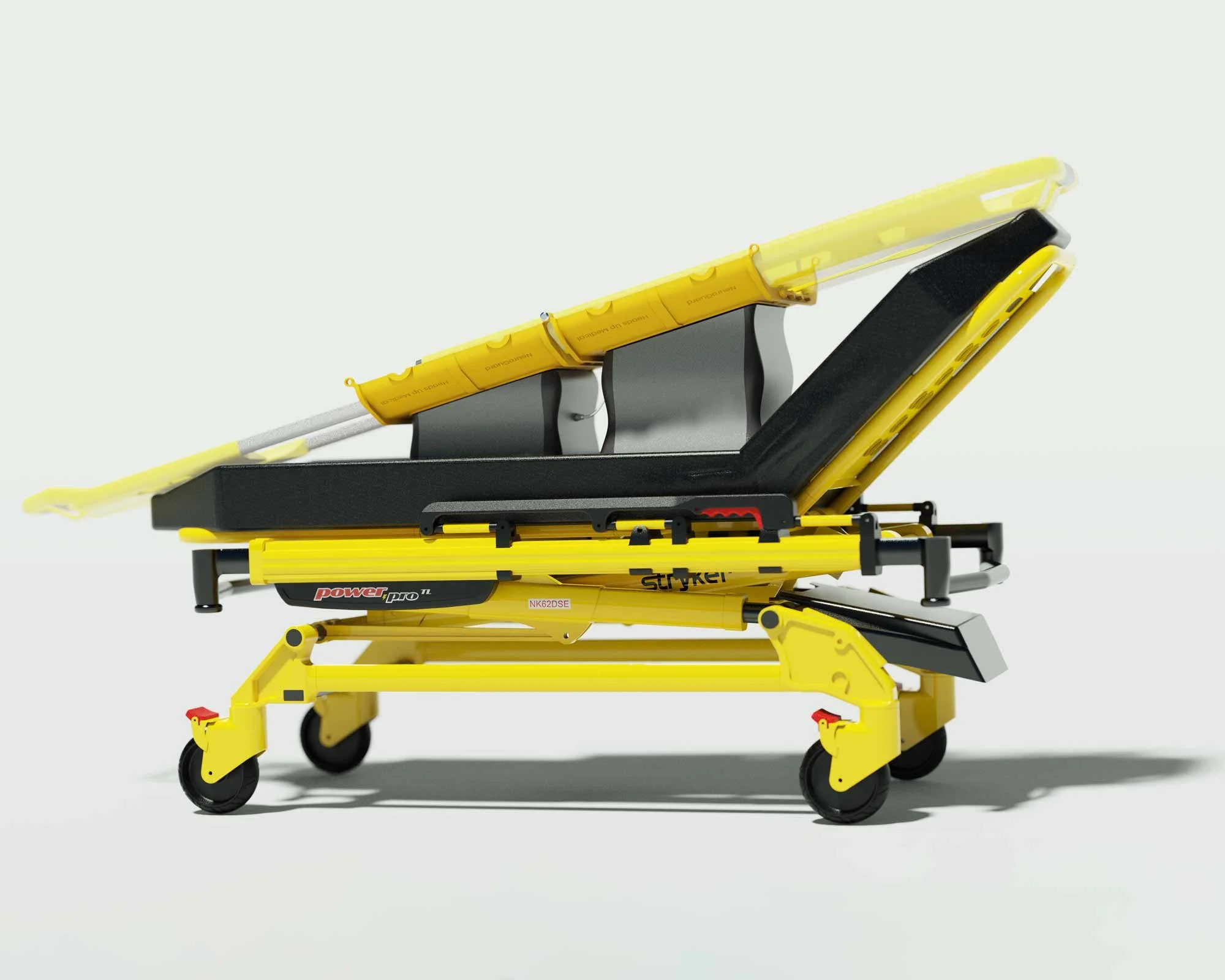
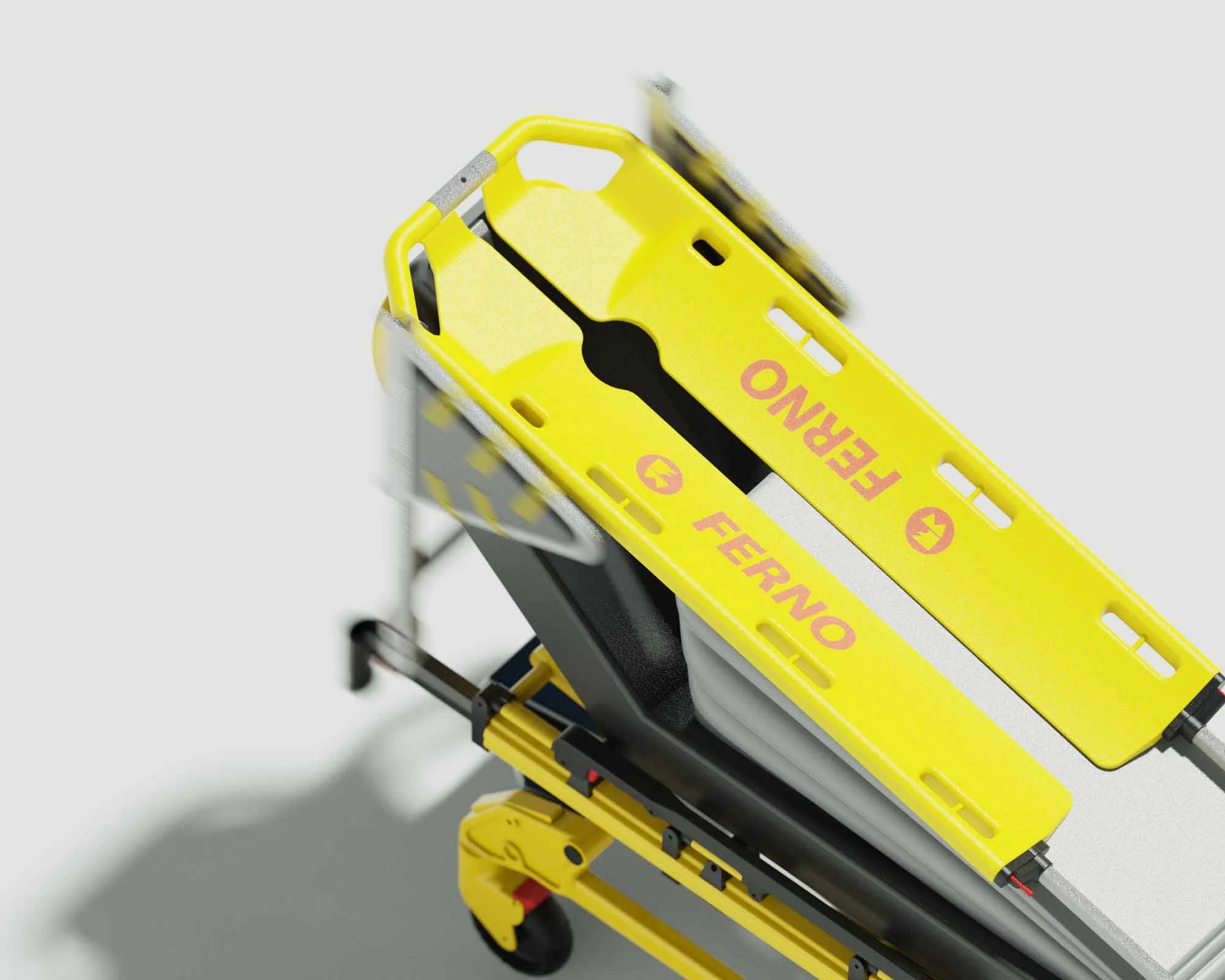
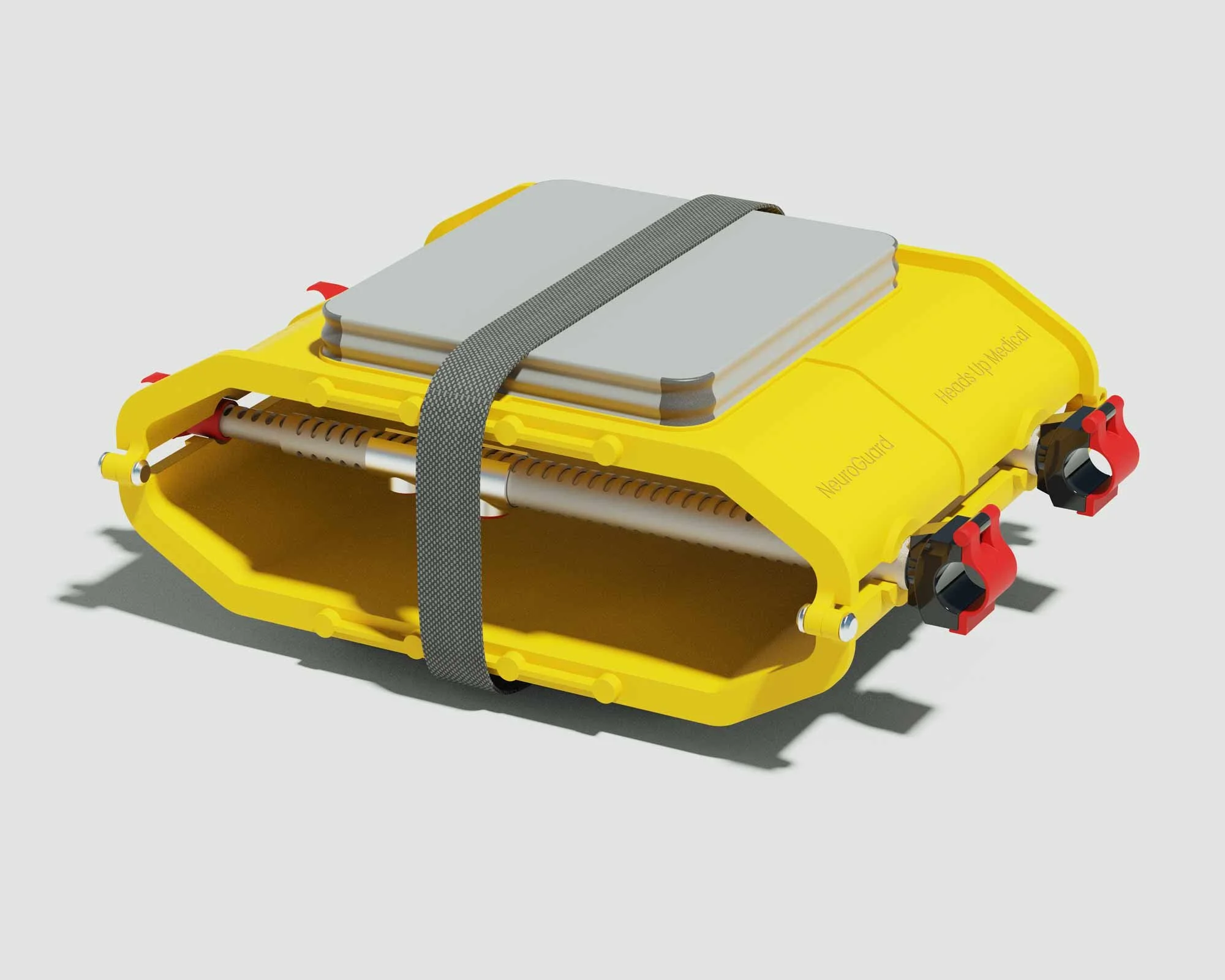
Client: NeuroGuard is an inflatable device created to reduce intracranial pressure in the head following traumatic brain injury, enabling paramedics to deliver safer, more reliable care. The patient is tilted to 15 degrees to reduce venous drainage and cerebral perfusion pressure which causes a loss of oxygen to the brain. The founder of NeuroGuard approached us to assist with the next stages of design development and prototype construction.
Approach: We started by interrogating the existing prototype to determine potential points of failure. It was discovered that when fully raised, the patient becomes highly unstable which created the risk of further injury. With this defined as the main scope for further development we moved on to explore the constraints of the system.
Challenges: Space efficiency is the main challenge when designing any new piece of equipment for use in an ambulance. The new solution had to be suitible for rapid deployment in under 90 seconds, which required iterative deployment of mechanisms and storage solutions. To achieve this we needed to thoroughly understand the constrains of the ambulance stretcher to optimise the device’s assembly process for time and space efficiency.
Deliverables: Whilst the development of NeuroGuard is ongoing, we have already delivered several concept packages, using reversed engineered CAD models as the foundations for concept development, producing high-quality rendered outputs which NeuroGuard can use to help secure further rounds of funding to enable the product a stage closer to commercial reality.

“Working with Pd-m has been instrumental in shaping the next generation of Neuroguard. From the outset the team demonstrated a clear understanding of both the clinical challenge and the importance of translating that into a practical, scalable product. Their ability to bridge real-world use with thoughtful, user-centred design has added significant value to the development process.”