
Intra Abdominal Platform
Redefining Surgical Retraction Through Intelligent Device Design
Abdominal Surgical Device
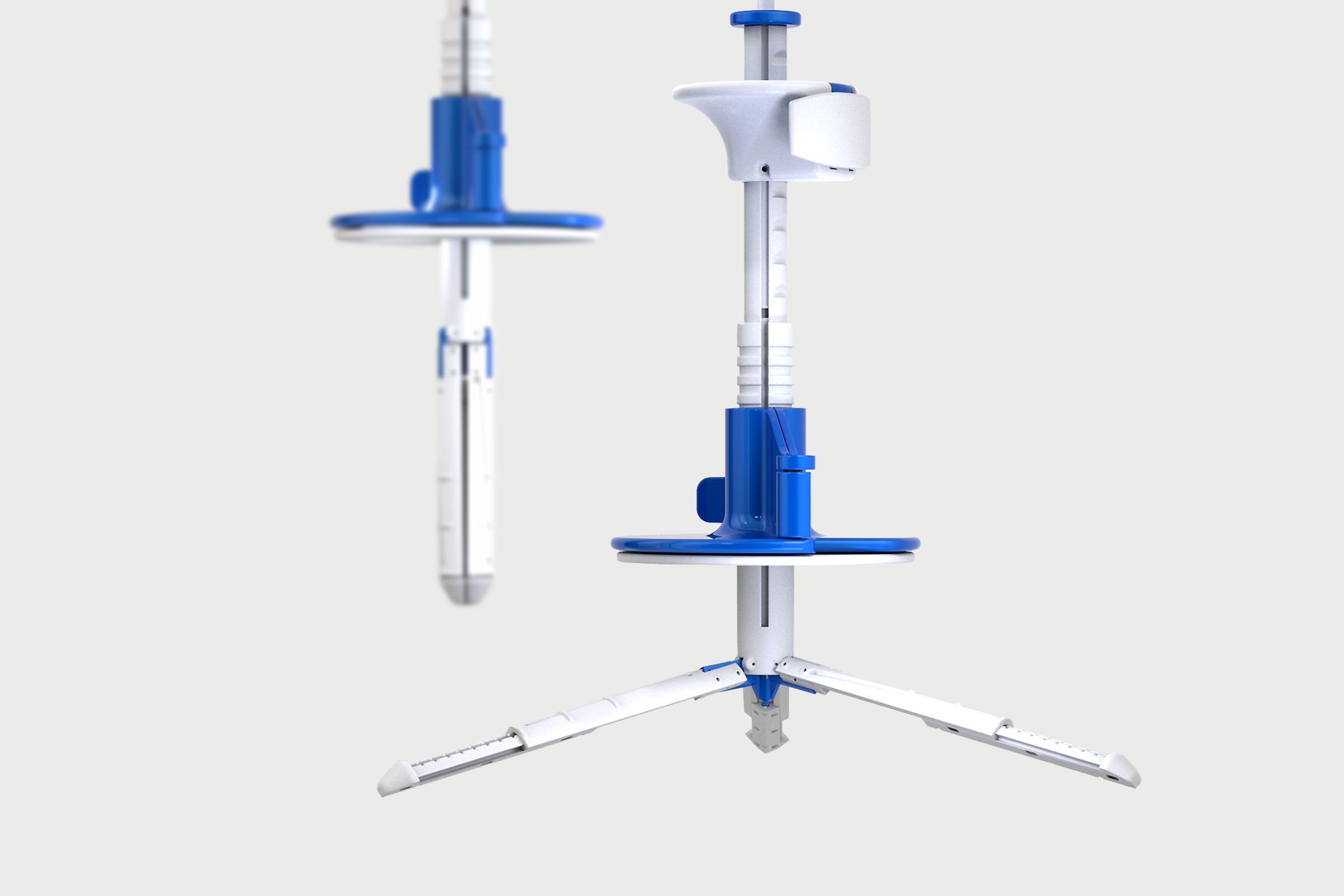
Client: In collaboration with the University of Leeds and Leeds Teaching Hospitals NHS Trust we supported the development of a novel surgical device to improve efficiency in minimally invasive procedures. During keyhole surgery, the abdomen is insufflated to create working space, but internal organs often obstruct access to target anatomy. Traditionally, surgical assistants manually retract tissue for extended periods, limiting efficiency and increasing fatigue. The IAP was conceived as a deployable internal platform to stabilise and reposition organs, reducing reliance on manual intervention.
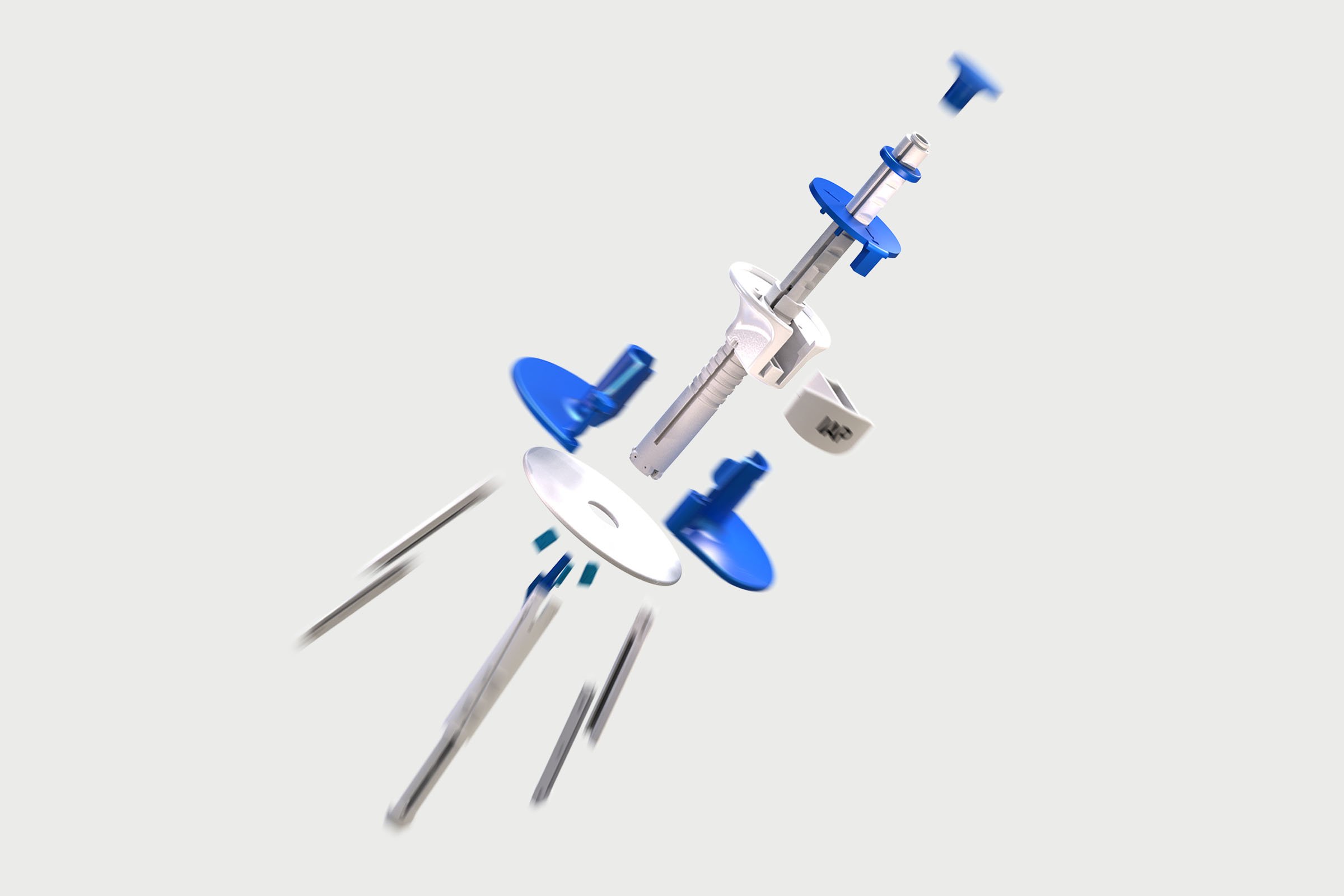
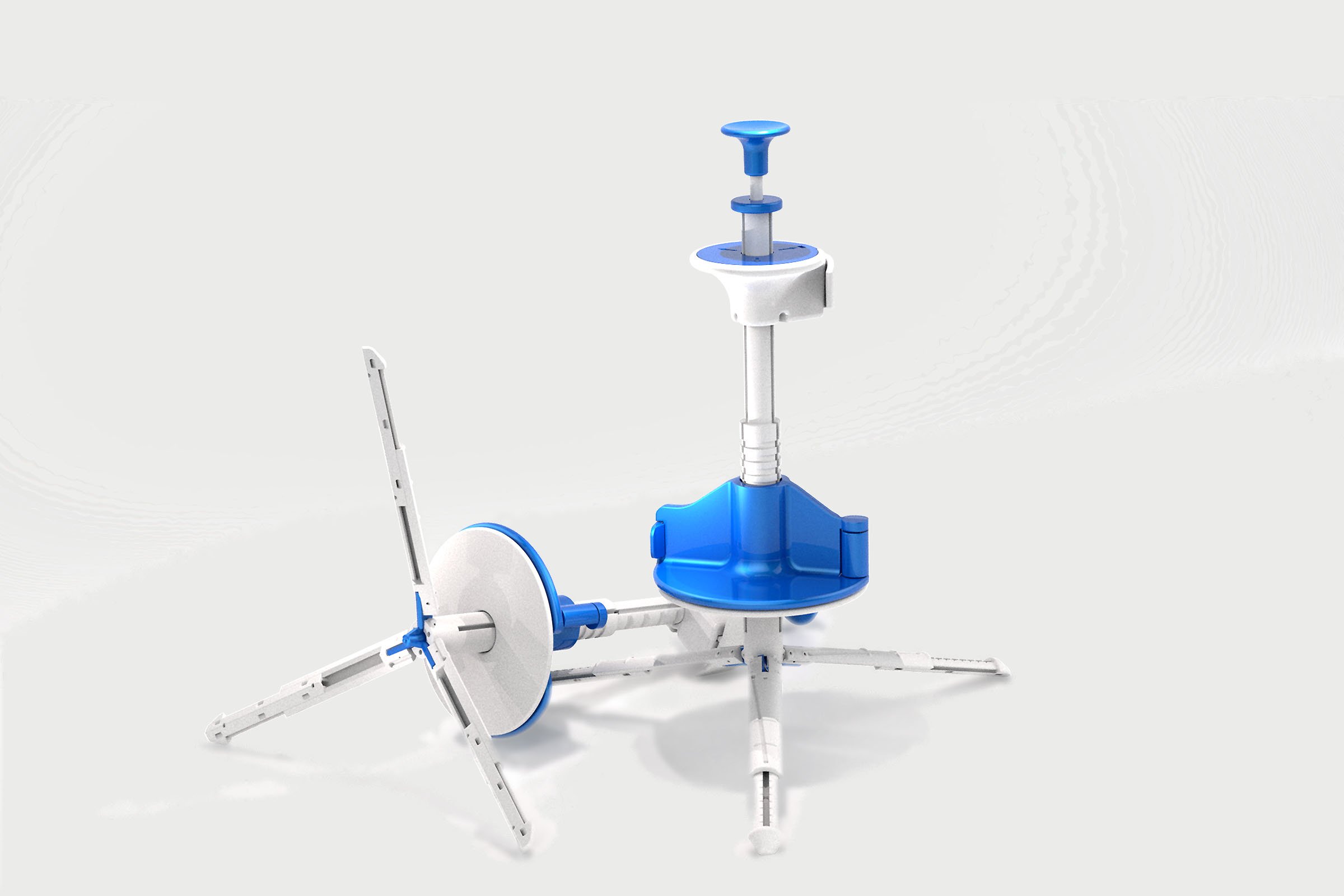
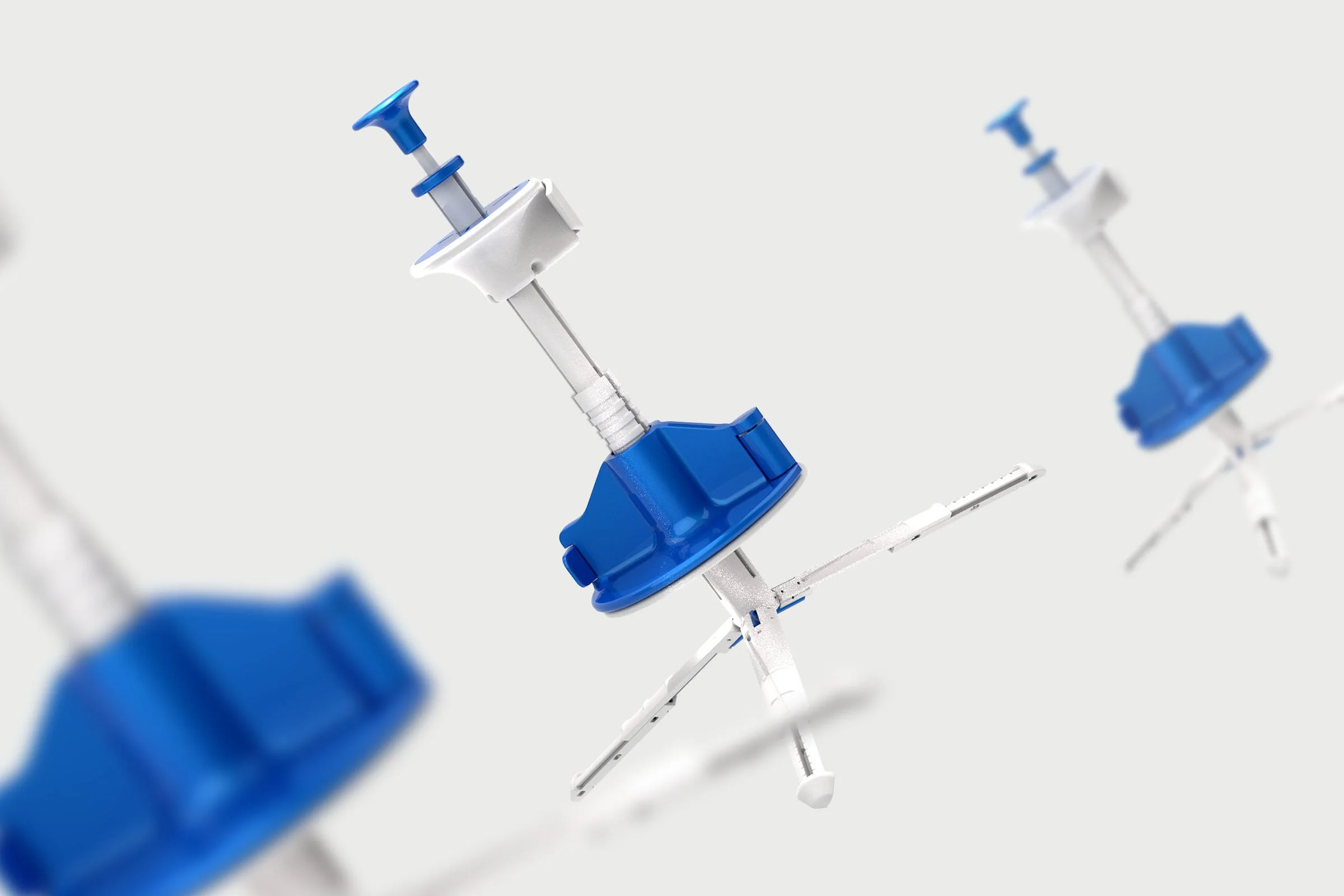
Approach: We led a ground-up design and development programme, translating early clinical concepts into a refined, deployable mechanism suitable for surgical use. The device was engineered to pass through a port before expanding into a three-arm structure that interfaces with the internal abdominal wall. Iterative 3D print prototyping and then injection moulded products enabled rapid evaluation of deployment mechanics, structural stability and usability within constrained anatomical environments. Continuous clinician feedback with porcine and cadavers shaped the validation process.
Challenges: The IAP required a delicate balance between flexibility, strength and minimally invasive delivery. The expanding arm mechanism had to be compact during insertion yet provide stable and atraumatic support once deployed. Materials and geometry needed to withstand internal forces without compromising patient safety. The system also had to integrate seamlessly into existing surgical workflows, maintaining intuitive use while delivering a clear functional advantage over traditional manual retraction techniques.
Deliverables: We delivered a fully resolved device architecture, including production-ready CAD, mechanism design and material specification. We developed functional prototypes for validation in both porcine and cadaveric trials, supporting iterative refinement under realistic surgical conditions. Transitioning from printed prototypes to injection-moulded components, we defined manufacturing strategies aligned with medical-grade requirements and scalable production.
Impact: The IAP transforms surgical workflow by providing stable, hands-free retraction within the abdominal cavity. By reducing the need for prolonged manual assistance, the device improves operating efficiency, minimises clinician fatigue and enables surgical teams to focus on higher-value tasks. Through rigorous development and real-world validation we helped bring a complex surgical concept closer to clinical and commercial viability.
“This project is an excellent example of how the team at Pd-m seamlessly integrated with academics and clinicians to translate the innovation from an academic theme to real-world, commercially centred viability.”