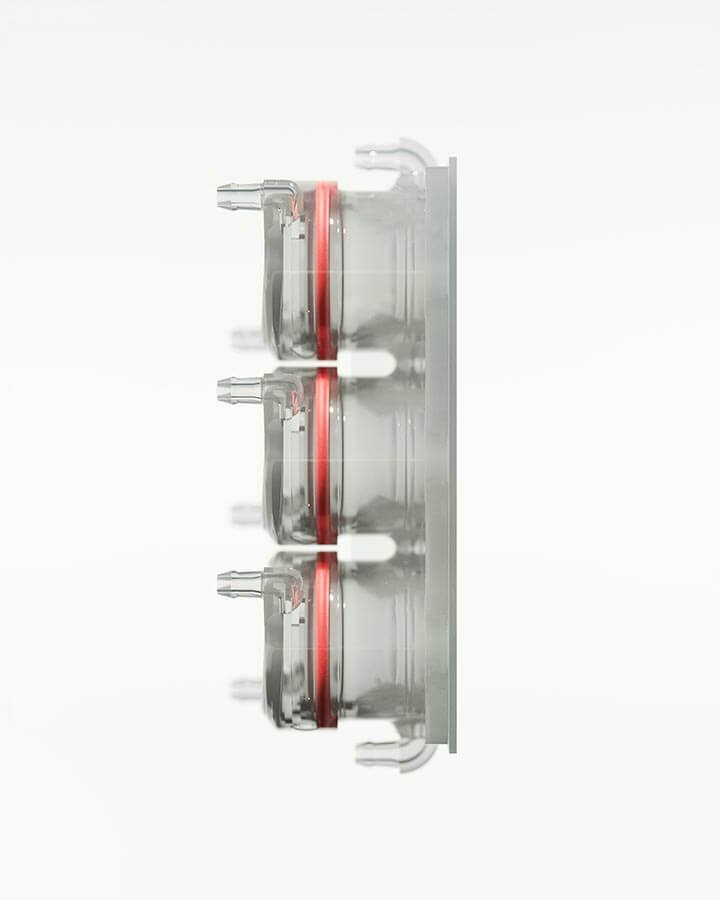
Millifluidic Device
Avoiding capital expenditure through additive manufacture
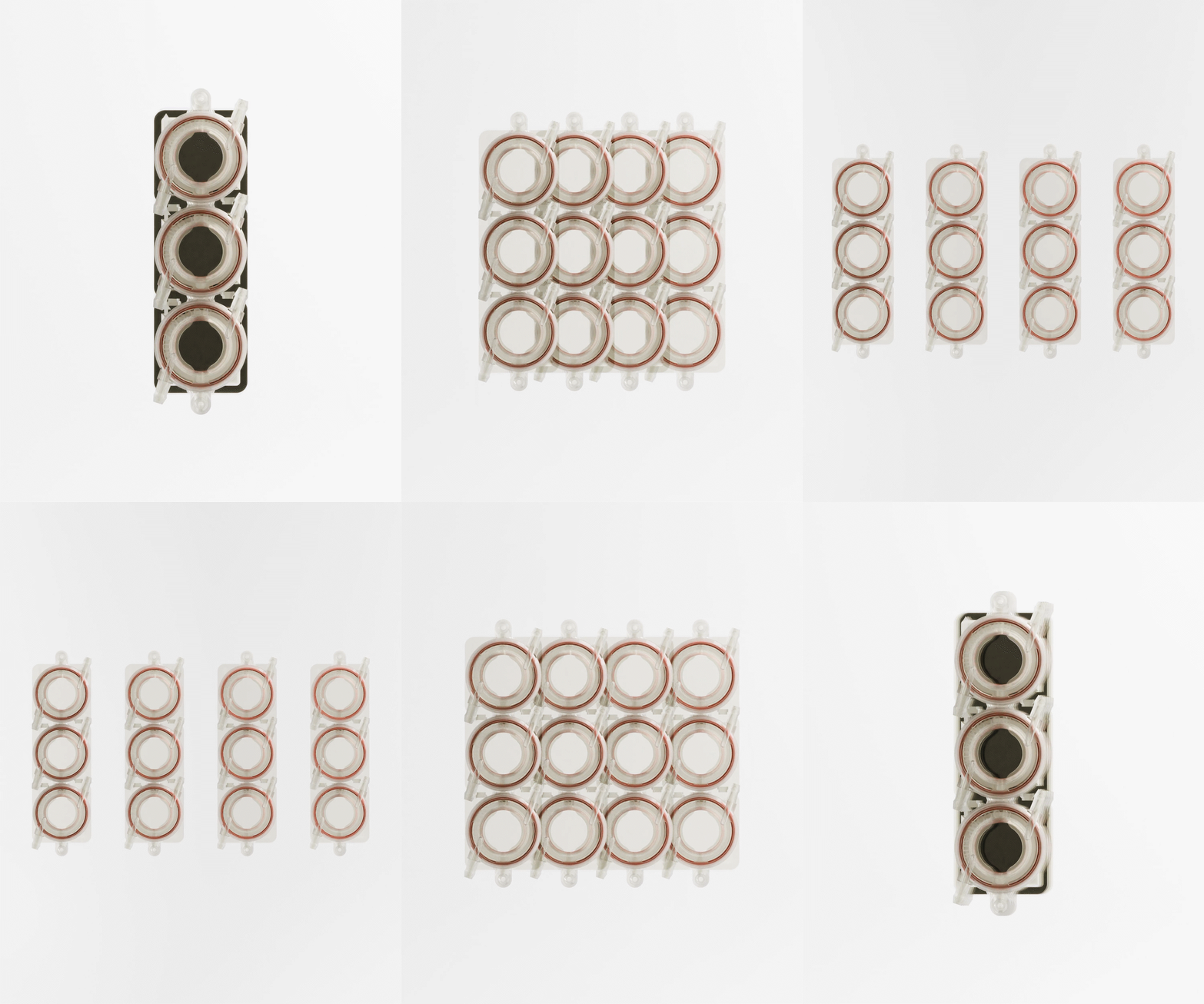
Kirkstall QV1200
Client: Advances in pre-clinical research continue to push for alternatives to animal testing, yet many laboratory workflows still rely on legacy equipment that limits the adoption of new, ethical methodologies. The team behind a novel organ-on-chip platform needed a development partner capable of scaling a scientific concept into a robust, manufacturable product, supplied reliably in small batches to global research markets. Our integrated design engineering and manufacture capability made us a natural fit.
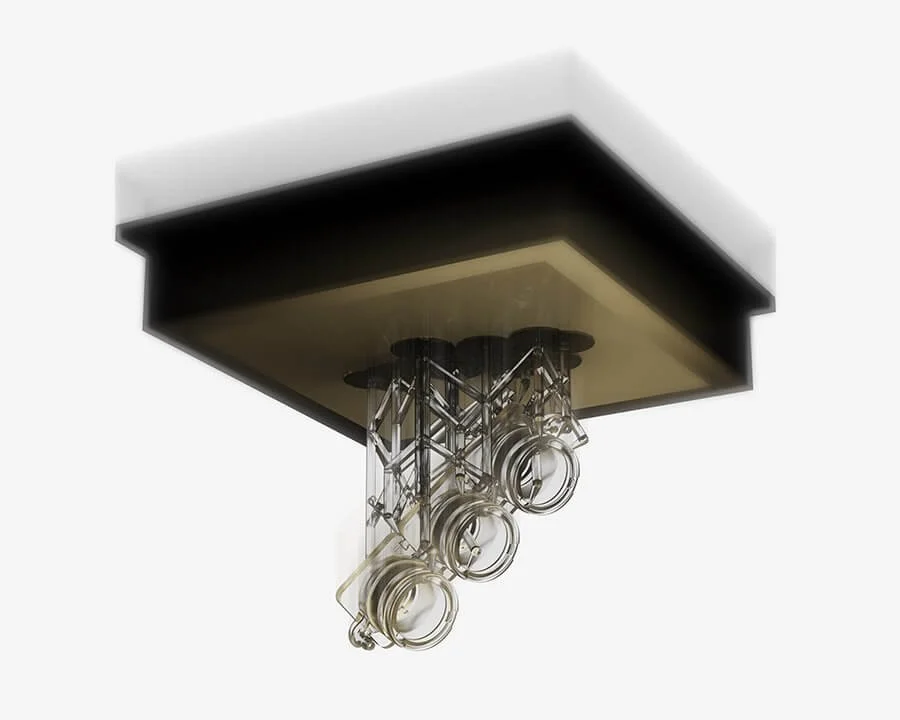
Approach: We began by analysing laboratory behaviours, equipment tolerances, and environmental constraints to understand how the new device needed to perform in real-world research settings. From there, we defined the core architecture, explored multiple configurations and iterated through design concepts to establish a form that was intuitive, durable and compatible with standard lab workflows.
Challenges: Creating a precision device for biological testing required careful consideration of fluid dynamics, sealing methods and material biocompatibility. We then needed to optimise the functional design solution for cost effective and time efficient additive manufacturing.
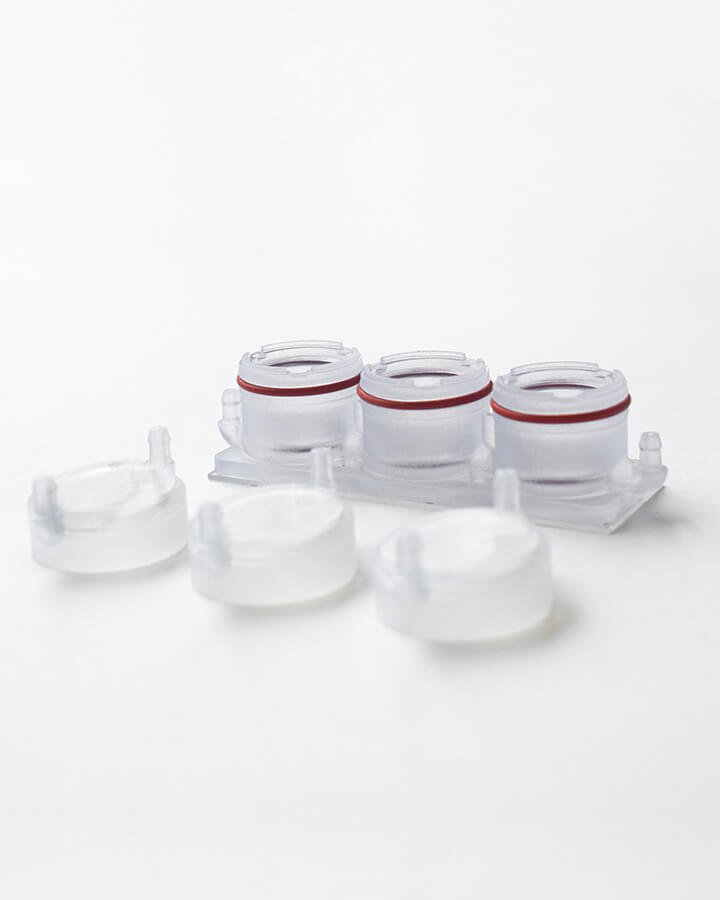
Deliverables: Focussed on communicating viability, our team delivered complete concept development, engineering refinement, and DFM package. We completed the supply chain setup, regulatory documentation and quality processes needed for dependable global distribution. Using in-house SLA additive manufacturing, we continue to produce clinical grade components with the tolerances required for laboratory use.
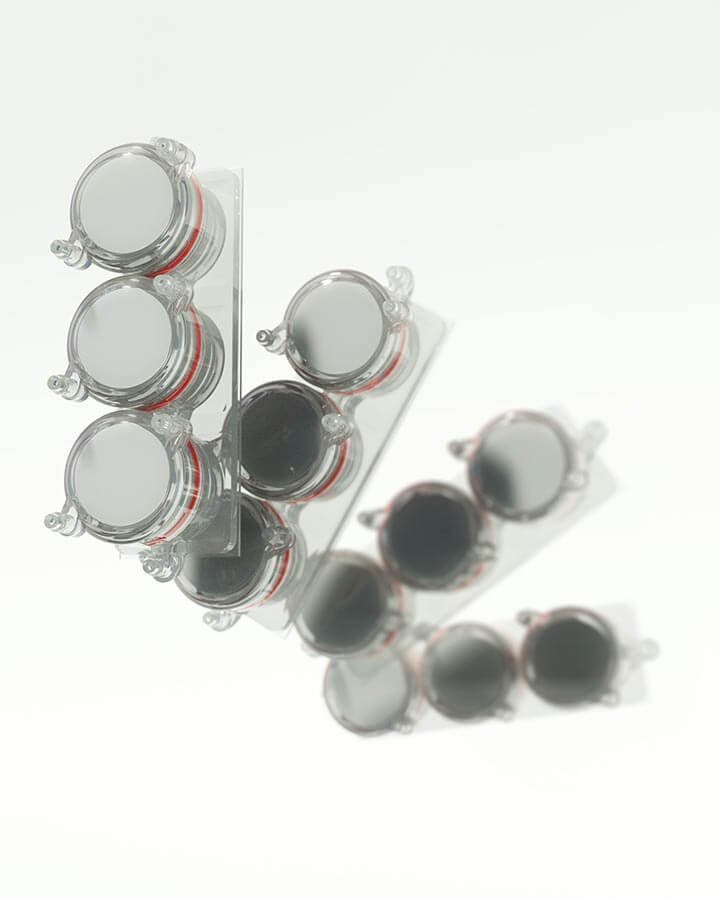
Impact: The resulting device is a world-first solution that supports the shift away from animal testing while fitting naturally into established lab practices. Manufactured on demand in the UK using additive processes, it offers researchers a reliable, scalable and ethically aligned tool now used in laboratories worldwide.